Risk-led access planning
Height, roof type, public exposure, and emergency sting risk are assessed before any direct action.
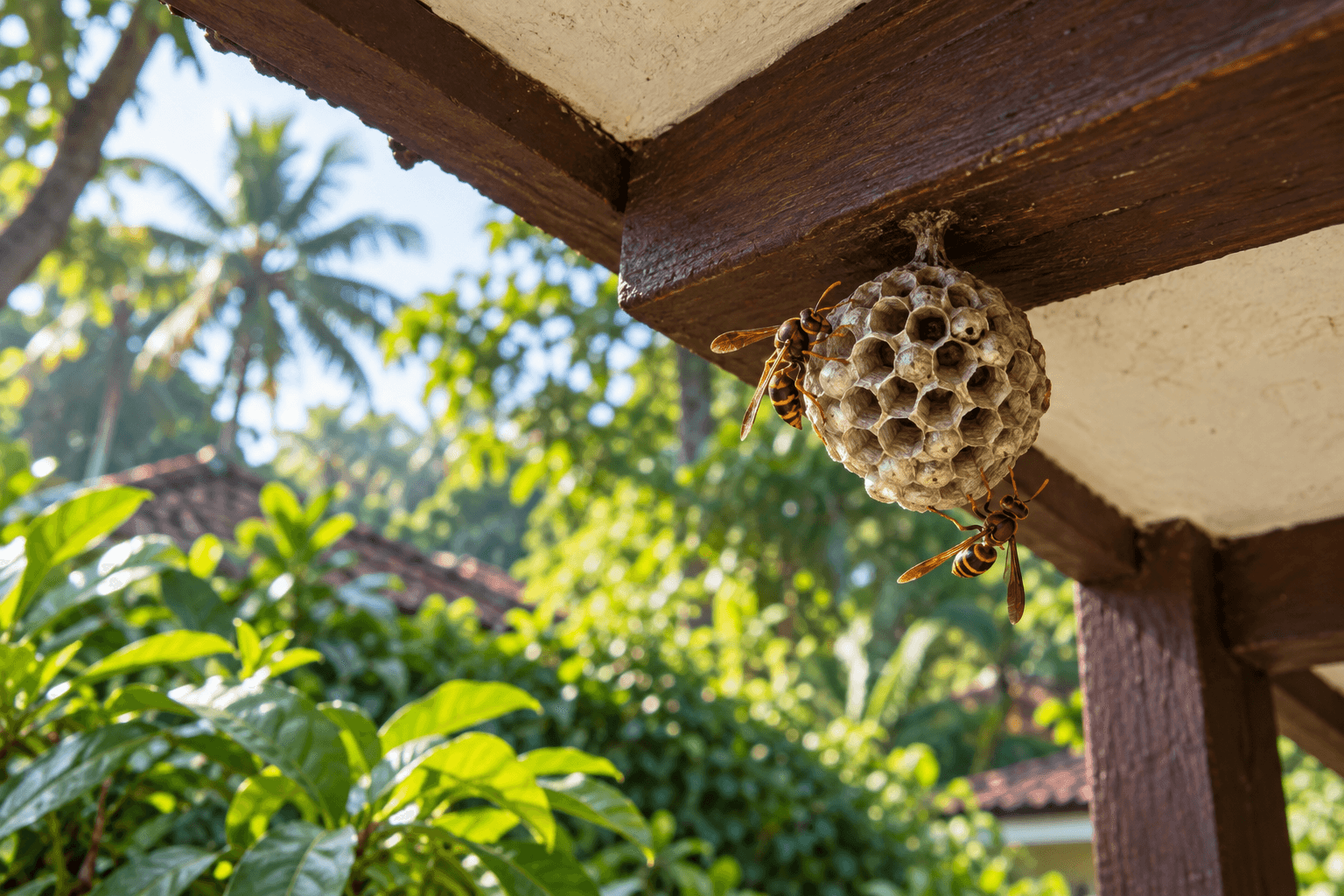
Active nests near entry points, seating areas, and rooftops create a safety risk for occupants. Trained removal handles nests promptly and safely without causing unnecessary disruption.
Overview
Wasp and bee activity can turn into an urgent safety issue when nests form near entrances, school grounds, service yards, loading docks, balconies, signage, and rooftop equipment. Disturbing a nest without planning can increase the sting risk for occupants, guests, staff, and neighbours.
Our service plans around nest location, height, access, traffic exposure, and whether relocation may be appropriate. Where bees can be responsibly relocated, we aim to support that option. Where aggressive wasp activity or unsafe access demands removal, technicians coordinate the job around safety, timing, and clear exclusion of nearby people. We also advise how to reduce future nesting pressure in sheltered structural points.
Treatment Process

We identify species behaviour, nest location, access height, and the immediate exposure risk to people using the area.

Relocation is considered where practical; otherwise removal or neutralisation is planned with exclusion controls in place.
Technicians review whether activity persists and whether hidden secondary nesting points remain nearby.

Openings, sheltered voids, and unmanaged outdoor attractants are reviewed to reduce future nesting.
Methods Used
The method is matched to the pest pressure, the property type, and how the space is used.
Height, roof type, public exposure, and emergency sting risk are assessed before any direct action.
For suitable bee situations, relocation may be preferable to destruction when it can be done safely.
When removal is necessary, the method is chosen to minimize exposure and disturbance to surrounding occupants.
Safety & Eco Measures
Best for schools, homes, hotels, warehouses, and sites where public or staff exposure needs careful management.
Bee handling is approached responsibly, with relocation considered whenever the site conditions allow.
FAQs
No. Disturbing a nest can increase the sting risk and make removal more dangerous. Keep people away and let the team assess it first.
Related Services
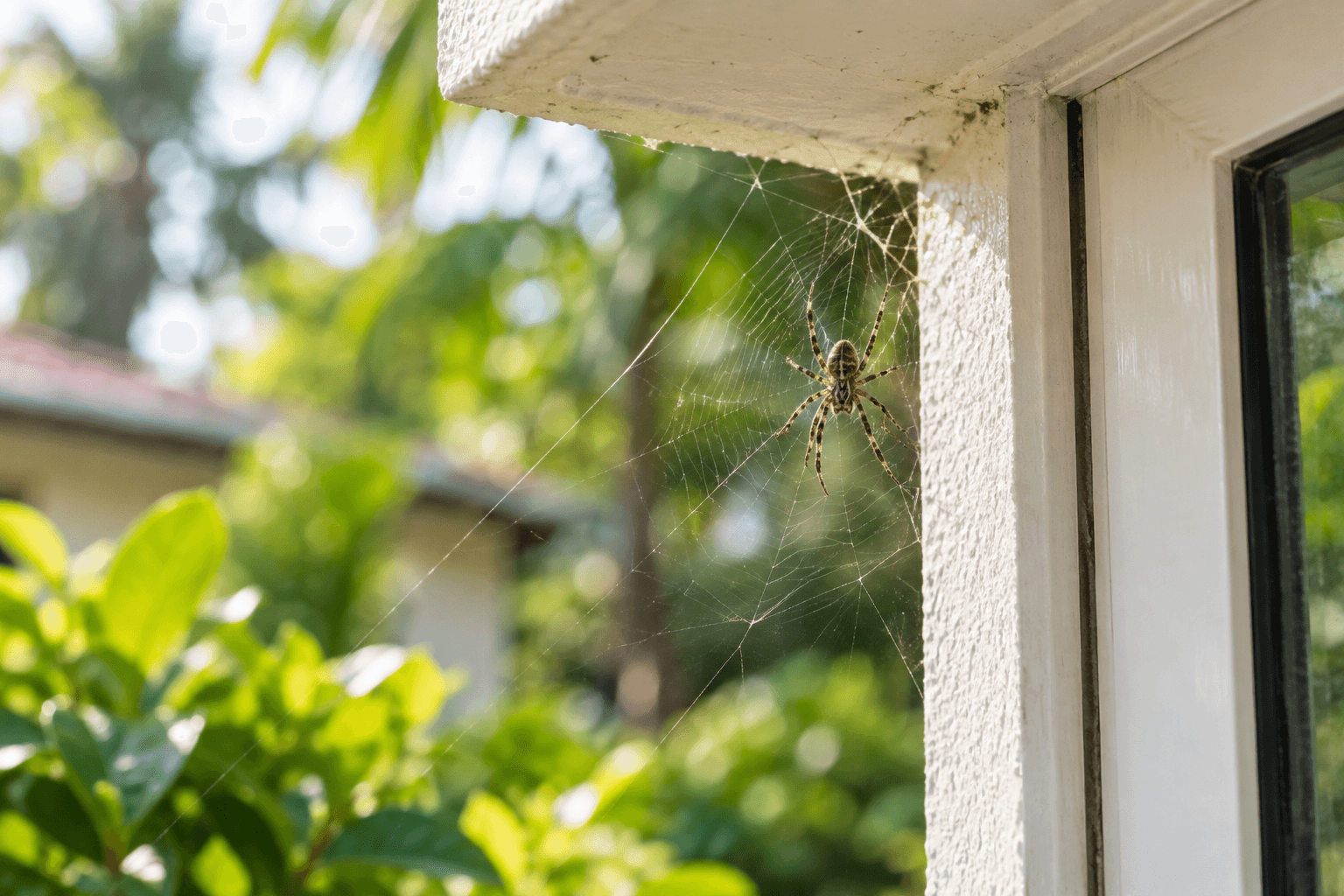
Spiders in occupied spaces create nuisance and concern for residents, guests, and staff. Treatment covers active areas with web clearance and practical advice to reduce re-establishment.
When multiple pest types appear across a property, a recurring maintenance program is more effective than repeated reactive callouts. The first visit shapes the schedule and coverage areas.
Persistent mosquito activity around homes, hotels, and outdoor areas creates biting discomfort and a genuine health concern. A scheduled misting program keeps pressure low through active periods.
Speak to the team by phone, book the right next step, or share the issue through the contact form. We will review the details and guide you toward the right service plan.